


Paper Bullet - Debt Dispute Process
Paper Bullet - Debt Dispute Process
A structured debt dispute correspondence system featuring dispute templates, follow-up notices, credit bureau removal letters, escalation documents, and detailed step-by-step instructions designed to help organize and document the debt validation process.
Couldn't load pickup availability


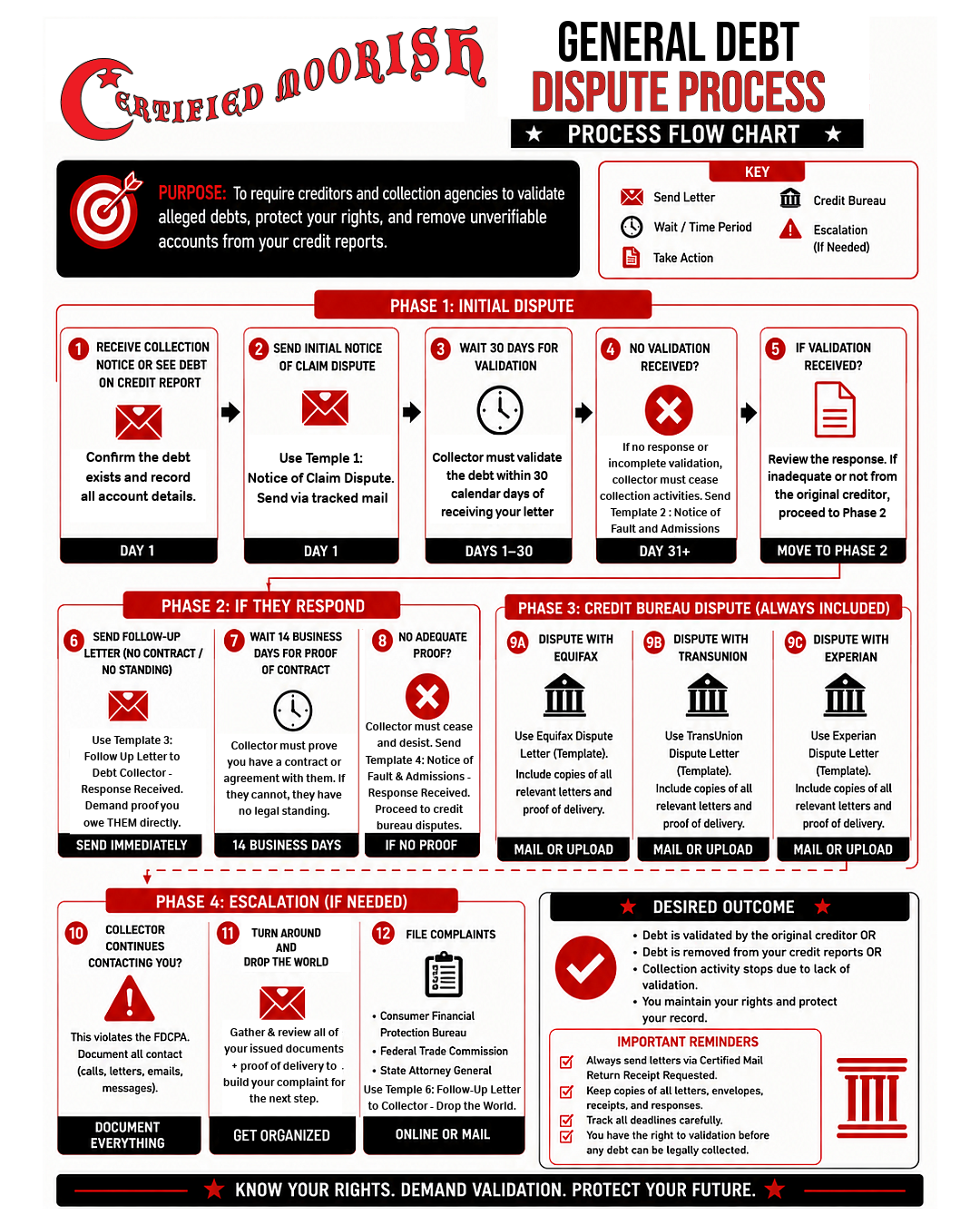
Paper Bullet: Debt Dispute Rebuttal Process
Paper Bullet is a focused debt dispute document process created for the person who receives civil correspondence from a collection agency claiming the right to collect an alleged debt without first proving a direct contract, valid authority, or verified obligation.
This process gives the contactee a structured written process for challenging the claim, demanding validation, documenting the collector’s response or lack of response, and preserving a paper trail for future disputes with the collection agency, credit bureaus, or consumer protection offices.
Instead of ignoring the letter, calling the collector, or responding from fear, Paper Bullet helps you answer in writing with clarity, sequence, and purpose.
What This Process Helps You Do
Paper Bullet is designed to help you:
- Challenge an alleged debt claim in writing.
- Demand validation from the collection agency.
- Request proof of contract, authority, and documentation.
- Create a record of certified mail correspondence.
- Respond when the collector sends bills, statements, or invoices instead of a signed contract.
- Issue a notice of fault when validation is not provided.
- Dispute unverified collection items with Equifax, Experian, and TransUnion.
- Prepare follow-up correspondence when the matter continues after prior dispute attempts.
What’s Included
Master Instruction Guide
A step-by-step guide explaining how to move through the debt validation process, when to use each template, how long to wait, and what records to keep.
Debt Validation Flow Chart
A visual guide showing the order of the process from first notice through follow-up, credit bureau dispute, and additional complaint steps.
Template 1: Notice of Claim Dispute
The opening notice used to dispute the alleged claim and demand validation from the collection agency.
Template 2: Notice of Fault and Facts Deemed Admitted
A follow-up notice for situations where the collector fails to properly validate the alleged debt.
Template 3: Follow-Up Letter to Debt Collector, Response Received
A response letter for when the collection agency replies with statements, bills, invoices, or other documents that do not establish a direct contractual obligation.
Template 4: Notice of Fault and Admissions, Response Received
A stronger follow-up notice for situations where the collector responds but still fails to provide proper validation.
Template 5: Credit Bureau Dispute Samples
Separate sample dispute letters for Equifax, Experian, and TransUnion to address unverified collection items appearing on a credit report.
Template 6: Follow-Up Letter to Debt Collector, “Drop the World”
A final escalation-style follow-up template for continued collection activity, reporting issues, or unresolved disputes after prior correspondence.
Built for the Written Record
Paper Bullet is not designed for arguments over the phone. It is built for the written record. Every step encourages the user to keep copies, save proof of delivery, track deadlines, and document every response.
The process centers on one simple principle:
Challenge the claim. Demand the proof. Keep the record.
This process is especially useful for people who receive collection notices from third-party agencies and do not recognize the debt, do not have a contract with the collector, or want the collector to validate the alleged obligation before continuing collection activity.
Important Notice
These documents are provided for educational and informational purposes only. They are not legal advice or financial advice. The creator is not acting as an attorney or financial advisor, and use of this process does not create an attorney-client relationship. Laws and procedures may vary by jurisdiction. Users are responsible for reviewing, editing, and using these materials according to their own situation.